

Introduction
Muscle contraction is a marvel of biological engineering, allowing us to perform a wide array of physical activities, from the simple act of blinking to the complex movements involved in athletic performance. Have you ever wondered about the intricate processes that occur within your muscles to facilitate these movements? In this blog post, we will take a fascinating journey into the molecular world of muscle contraction, unraveling the intricate dance between nerve signals and cross-bridge cycling that powers our every move.

The Neuromuscular Connection
At the heart of muscle contraction lies the intricate interplay between nerve signals and muscle fibers. This connection, known as the neuromuscular junction, is where the nervous system communicates with the muscular system. When your brain sends a signal to move, it travels along motor neurons until it reaches the neuromuscular junction. Here, the signal triggers the release of a neurotransmitter called acetylcholine into the synapse, the tiny gap between the nerve and the muscle fiber.
Acetylcholine binds to receptors on the muscle fiber’s membrane, causing an influx of sodium ions and generating an electrical impulse that travels along the fiber. This impulse travels deep into the muscle fiber via a network of tubular structures called T-tubules, eventually reaching the sarcoplasmic reticulum.
Calcium Release and Actin-Myosin Interaction

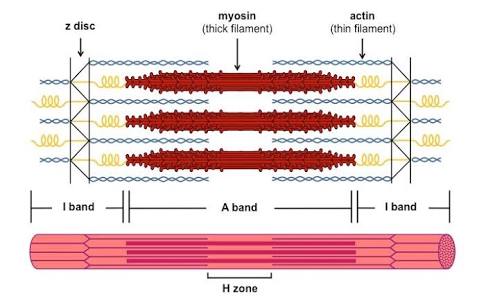
The sarcoplasmic reticulum is a specialized organelle within the muscle fiber that stores calcium ions. When the electrical impulse reaches the sarcoplasmic reticulum, it triggers the release of calcium ions into the muscle cell’s cytoplasm. This influx of calcium is a pivotal step in muscle contraction, as it exposes binding sites on actin, a protein found in thin filaments within the muscle fiber.
The binding sites on actin provide docking points for myosin, another protein found in thick filaments. Myosin has a unique structure, with a globular head that can form temporary cross-bridges with actin when the two proteins interact. This interaction is the driving force behind muscle contraction.
Cross-Bridge Cycling: The Power Stroke

The process of muscle contraction, known as cross-bridge cycling, involves a series of intricate steps that generate force and lead to muscle shortening. When a myosin head binds to an actin filament, it undergoes a conformational change, releasing stored energy. This energy is harnessed as the myosin head pivots, pulling the actin filament along with it. This movement is aptly named the “power stroke.”
As the myosin head completes the power stroke, it detaches from the actin filament. The cycle repeats when another ATP molecule binds to the myosin head, causing it to release from the actin filament. ATP is then hydrolyzed to ADP and inorganic phosphate, providing the energy needed to reset the myosin head into its high-energy state, ready to bind to actin again and initiate another power stroke.

Relaxation and Muscle Control
After the nerve signal ceases and acetylcholine is broken down, calcium ions are actively pumped back into the sarcoplasmic reticulum. As calcium levels in the cytoplasm decrease, the binding sites on actin become covered, preventing myosin from forming cross-bridges. This leads to muscle relaxation, allowing the muscle to lengthen and return to its original state.
Conclusion

The molecular process of muscle contraction is an awe-inspiring symphony of events that underscores the complexity of the human body. From nerve signals triggering the release of acetylcholine to the intricate cross-bridge cycling that powers movement, every step in this process is a testament to the marvels of biology and physiology. Understanding these mechanisms not only provides insight into our everyday movements but also fuels advancements in fields such as sports science, physical therapy, and medical research. So, the next time you flex a muscle or perform a physical feat, remember the intricate dance of molecules that make it all possible.


- Magnets: A Revolutionary Approach to Healing the Brain
- Anxiety And Depression Explained: A Holistic Approach
- Demystifying Muscle Weakness and Muscle Inhibition: Understanding the Differences
- Unlocking The Secrets Of Our Body’s Feedback System: Spindle Cell And Golgi Tendon Reflexes
- Unveiling The Science Behind Muscle Contraction: Exploring Muscle Fiber Activation
Contact Me/Get on the Email List


Leave a Reply